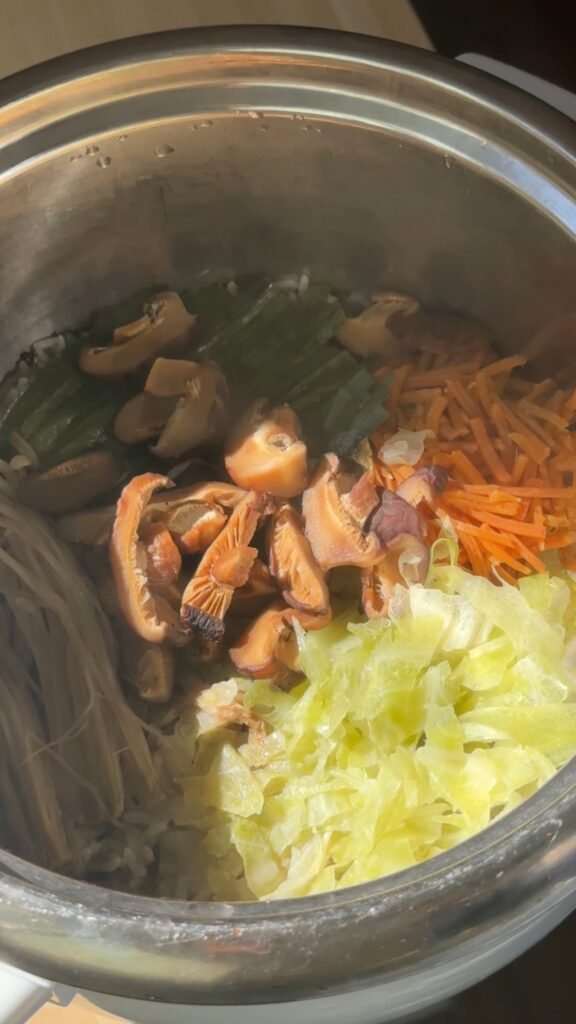
If you’ve ever wished bibimbap could be made faster and easier, this rice cooker beef bibimbap is the answer. Traditionally, bibimbap takes multiple pans and a lot of timing—but this recipe streamlines the process into one comforting, colorful bowl. With the help of your rice cooker, you can layer in tender beef slices, earthy mushrooms, crisp vegetables, and nutty purple rice for a nourishing, protein-packed meal that’s as beautiful as it is delicious.
The combination of purple and white rice gives this dish a subtle chewiness and a gorgeous hue, while the beef infuses the grains with rich flavor as it cooks. Fresh vegetables like cabbage, carrots, and mushrooms add color, crunch, and nutrients, creating that signature bibimbap texture contrast without the fuss.
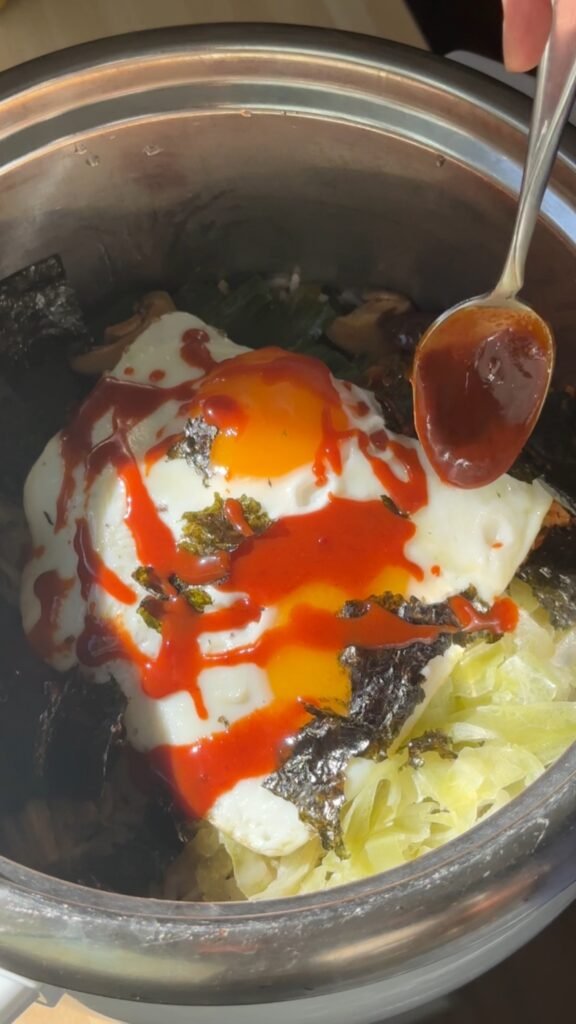
And of course, no bibimbap is complete without the spicy-sweet gochujang sauce — made with gochujang, soy sauce, sesame oil, and a touch of honey for balance. Drizzle it generously over your rice bowl, top with fried eggs, and you’ll have a cozy, high-protein meal that feels like comfort in every bite.
2️⃣ Nutrition & Key Ingredients
This rice cooker beef bibimbap is high in protein, low in added fats, and full of fiber thanks to the purple rice and mixed vegetables. It’s the perfect meal for a satisfying lunch or dinner that keeps you full without feeling heavy.
Key Ingredients:
- Beef slices: Lean and tender, providing a great source of protein and iron.
- Purple and white rice mix: Adds antioxidants, texture, and beautiful color.
- Onion and cabbage: Naturally sweet and savory when steamed together.
- Carrot and chives: Bright, fresh flavor and a boost of vitamins.
- Enoki and shiitake mushrooms: Add depth, umami, and plant-based nutrients.
- Gochujang sauce: Spicy, savory, and slightly sweet — ties all the flavors together.
- Fried eggs: Rich in protein and healthy fats, finishing the bowl perfectly.
Nutritional highlights:
- High in protein
- Low in saturated fat
- Packed with fiber
- Excellent source of vitamins A and C
- Naturally gluten-free if you use gluten-free gochujang and soy sauce
3️⃣ Why You Should Make This
This recipe simplifies one of Korea’s most beloved dishes without losing any flavor. Everything cooks right in your rice cooker, which means less cleanup, fewer dishes, and perfect rice every time. It’s customizable — swap in your favorite vegetables or protein — and meal prep friendly since the components reheat beautifully.
If you love wholesome, colorful meals that taste amazing and support a high-protein, balanced diet, this rice cooker beef bibimbap will quickly become a go-to favorite.
Easy Rice Cooker Beef Bibimbap Recipe You’ll love ❤️
This rice cooker beef bibimbap combines purple rice, white rice, tender beef slices, and colorful vegetables into one easy, protein-rich meal. Finished with fried eggs and a spicy gochujang sauce, it’s comfort food made simple — flavorful, nourishing, and ready with minimal cleanup.
Ingredients
Instructions
-
Rinse the white and purple rice together and add them to the rice cooker with bone broth.
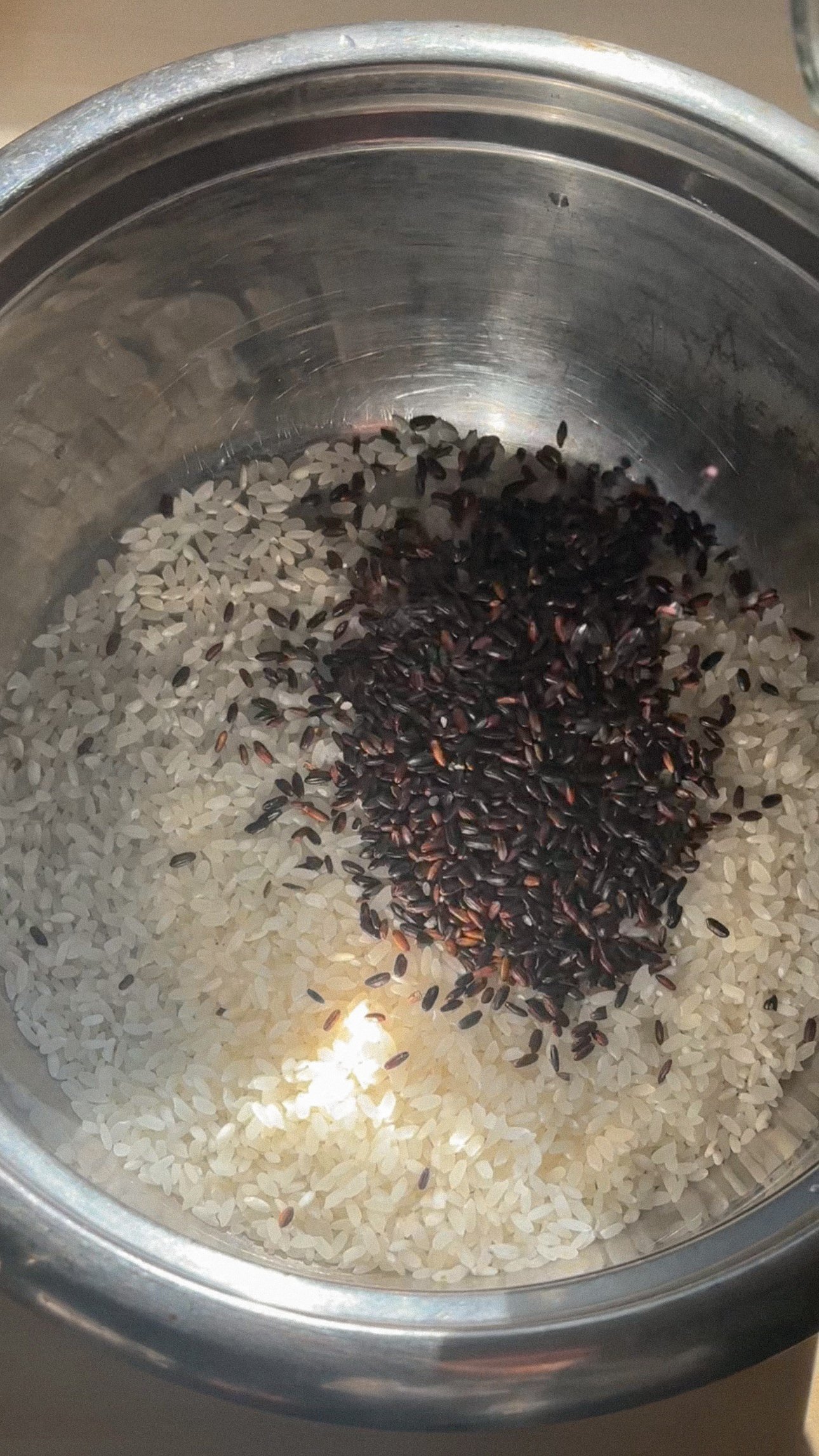 If your rice burns easily you may substitute 1/2 of the liquid for water.
 -
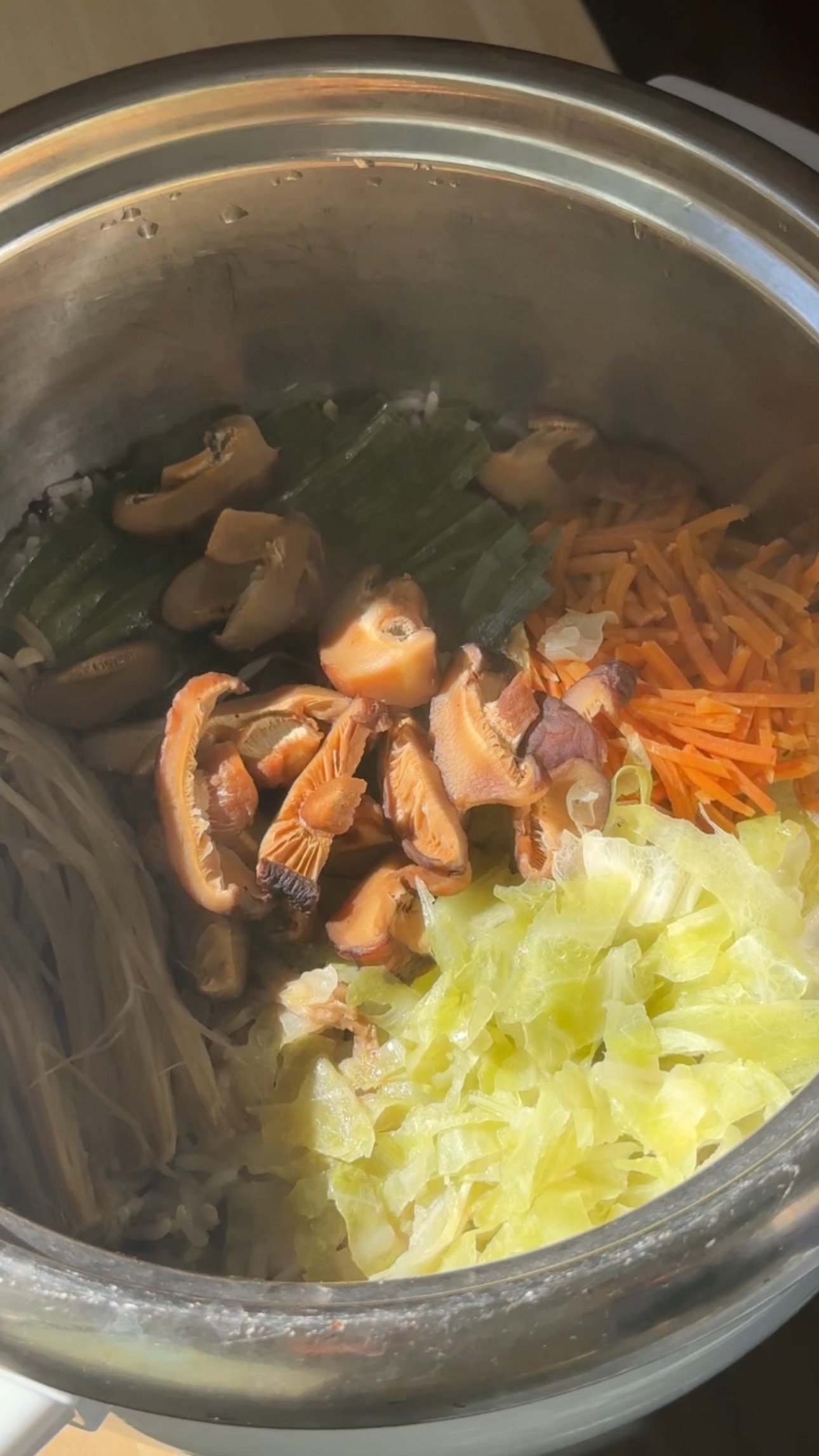
Place the beef slices evenly on top of the rice. Add the sliced onion, cabbage, chives, carrot, and both mushrooms on top of the beef.
-
Cook using the regular white rice setting until the rice and toppings are tender.
-
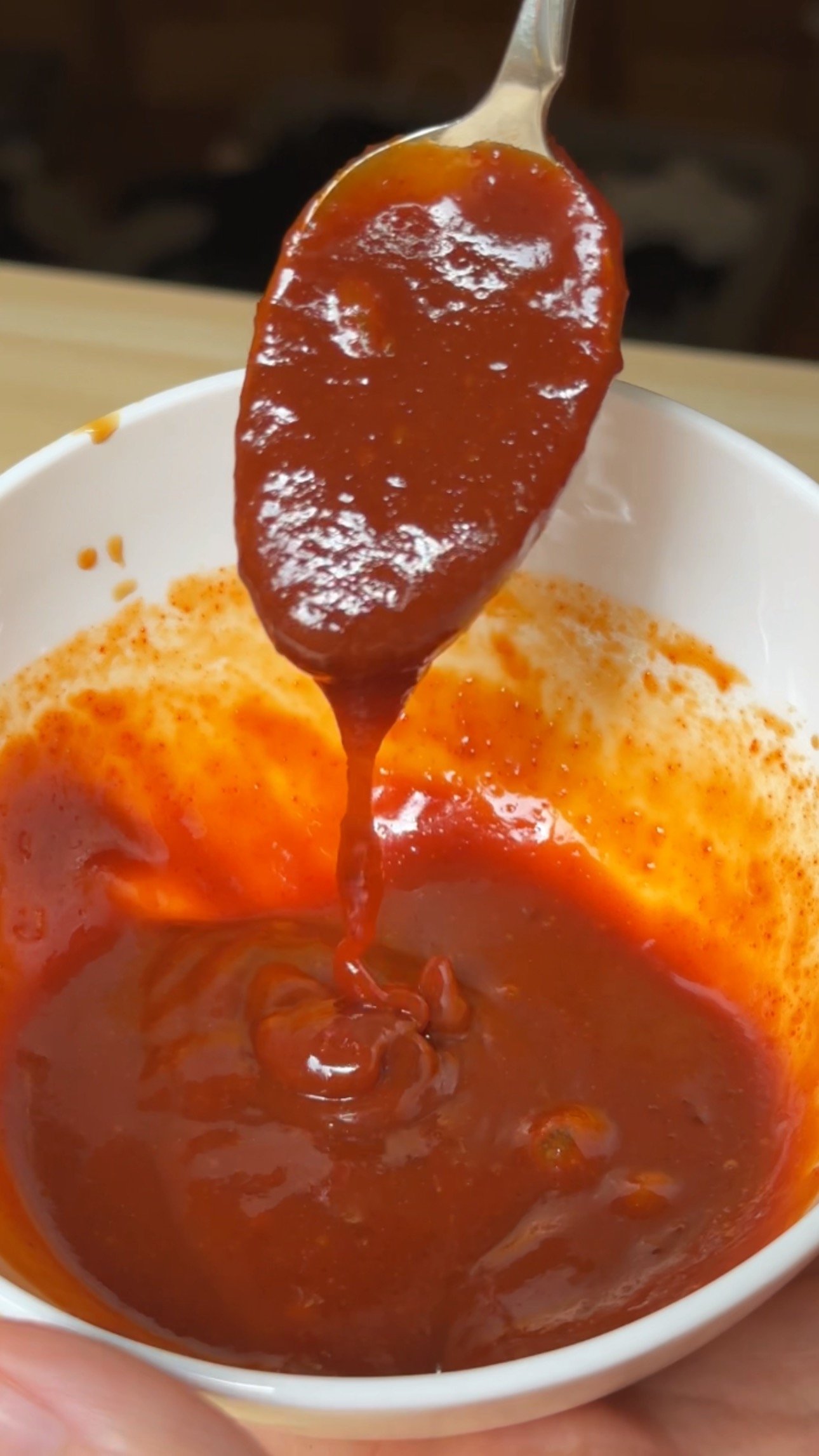
While the rice cooker is cooking, mix gochujang, soy sauce, sesame oil, and honey in a small bowl to make the spicy sauce.
-
When the rice cooker finishes, fluff the rice and mix gently to combine the ingredients.
-
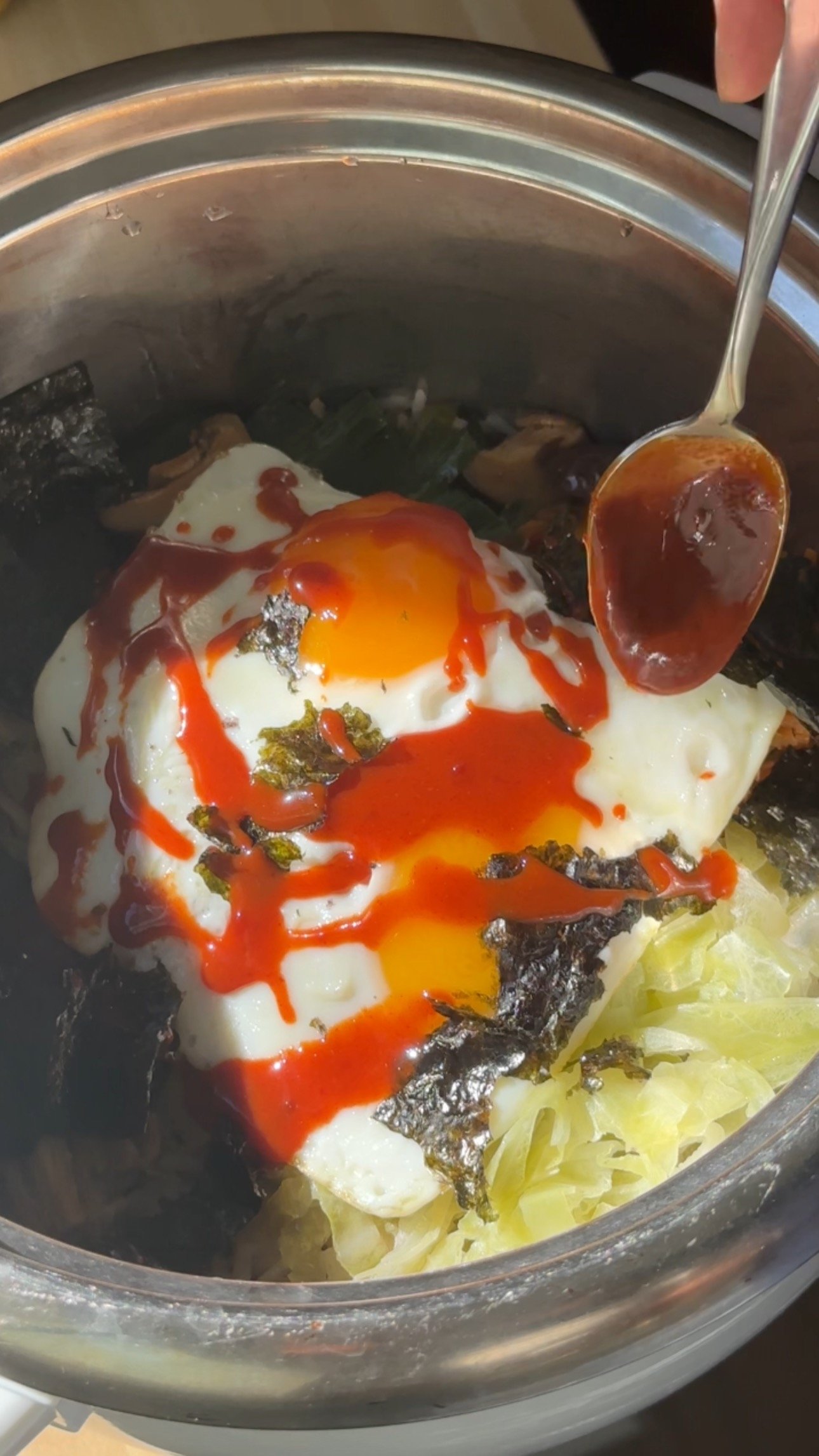
Fry two eggs in a small pan until the edges are crispy. Serve the bibimbap in bowls, top each with a fried egg, and drizzle with the spicy gochujang sauce.
Nutrition Facts
Nutrition Facts
Servings 3
- Amount Per Serving
- Calories 546.74kcal
- % Daily Value *
- Total Fat 20.23g32%
- Saturated Fat 7.08g36%
- Cholesterol 162.8mg55%
- Sodium 262.44mg11%
- Potassium 678.94mg20%
- Total Carbohydrate 64.31g22%
- Dietary Fiber 3.81g16%
- Sugars 7.7g
- Protein 26.44g53%
- Vitamin A 4105.59 IU
- Vitamin C 17.48 mg
- Calcium 76.3 mg
- Iron 3.22 mg
- Vitamin D 0.82 mcg
- Vitamin E 0.96 mg
- Vitamin K 37.52 mcg
- Thiamin 0.17 mg
- Riboflavin 0.43 mg
- Niacin 7.06 mg
- Vitamin B6 0.62 mg
- Folate 59.16 mcg
- Vitamin B12 1.88 mcg
- Pantothenic Acid 2.33 mg
- Phosphorus 332.85 mg
- Magnesium 53.3 mg
- Zinc 4.86 mg
- Selenium 32.4 mcg
- Copper 0.32 mg
- Manganese 0.9 mg
* Percent Daily Values are based on a 2,000 calorie diet. Your daily value may be higher or lower depending on your calorie needs.